5 Signs You Need a New Bathroom (Not Just a Refresh)
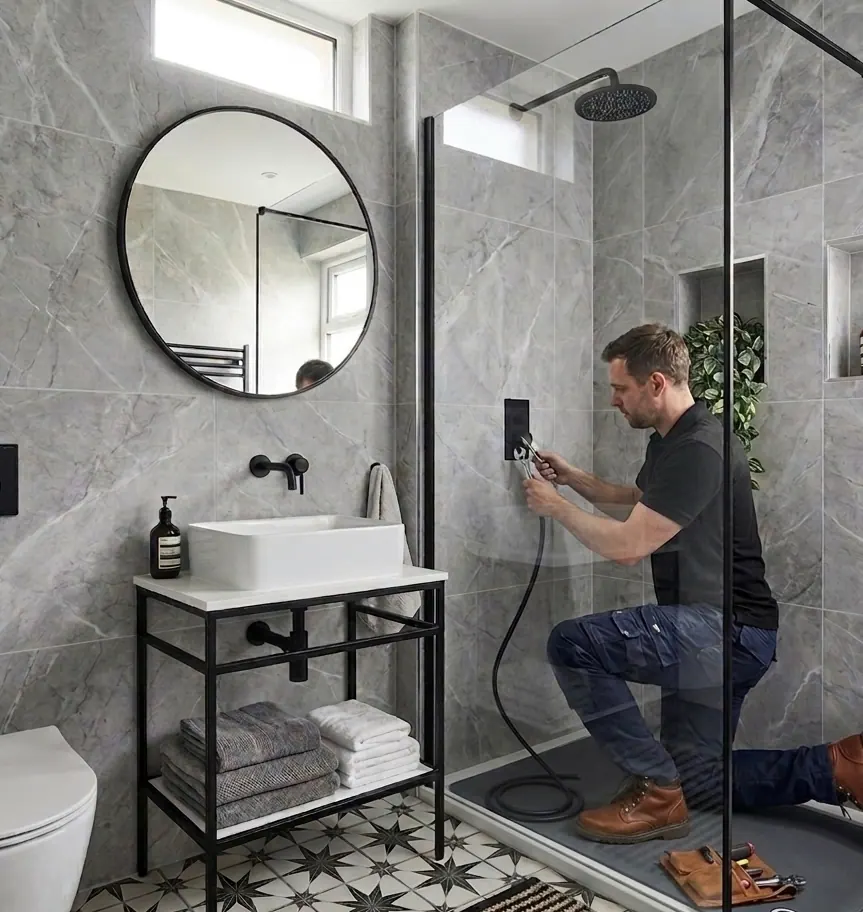
A refresh costs a couple of thousand. A full refit costs four figures more. So the question worth answering before you spend anything is which one you actually need — and there’s a simple rule that gets it right nearly every time: refresh what’s ugly, replace what’s wet. A dated bathroom is a decorating problem. A wet one is a building problem, and no amount of new grout, paint or sealant will fix it. Here are the five signs that tell you which you’ve got.
1. The Floor Feels Soft or Springy
Walk the floor barefoot, particularly beside the bath, around the shower tray and in front of the toilet. Any give, sponginess or movement means water has got past the surface and into the floor structure — and once boards or joists are soft, that’s a structural problem, not a decorating one.
Look for the supporting evidence too: a stained or bulging ceiling in the room below, warped or lifting flooring, peeling paint at skirting level, or a musty smell that never quite goes. You cannot tile, seal or paint over a wet floor. It needs lifting, the leak needs finding, and anything you spend on the surface first is money you’ll spend again.
2. Tiles Sound Hollow or the Grout Keeps Cracking
Tap around the tiles with a knuckle. A solid tick means the tile is properly bonded. A hollow, drummy sound means the tile has lost its grip on what’s behind it — often because the board behind has got wet and swollen.
The other tell is repetition. Grout that cracks in the same place within months of being redone is telling you the surface behind it is moving or wet. Regrouting it again just resets the clock on the same failure. If you’ve resealed the bath twice in two years and it keeps going black or peeling away, that isn’t bad silicone technique — it’s movement or moisture underneath, and it needs opening up rather than re-covering.
The knuckle test
Tap across a whole tiled wall, not just the bit that looks bad. If a few tiles near the bath sound hollow, that’s a patch. If a whole area drums, the substrate has failed and retiling over it will only buy a year or two. Do the same along the shower tray edge — that’s where failed waterproofing shows up first.
3. Mould That Keeps Coming Back
Every bathroom gets a bit of mould. The question is whether it stays gone. Clean it off, and if it’s back in a fortnight, you’re not looking at a cleaning problem — moisture is either being trapped in the fabric of the room or never leaving it in the first place.
Two usual causes. Either water is getting behind the surface through failed sealant or grout and the wall is permanently damp, or the extraction simply isn’t doing its job. Worth checking the fan honestly: hold a sheet of tissue paper to it while it’s running — if it doesn’t hold, the fan isn’t shifting enough air, and no refit will fix a room that can’t dry out. Black mould on the ceiling and a fan that does nothing is a cheap fix. Black mould spreading from behind the tiles is not.
4. The Layout Is the Problem
This one has nothing to do with damage. If the door catches the basin, there’s nowhere to stand to dry off, the radiator is behind the toilet, or the bath is in the only spot that could take a proper shower — that’s a plan problem. New tiles and a new suite in the same positions leave you with exactly the same room, only shinier.
Same goes for changing needs. Swapping a bath for a level-access shower, adding a wet room, or making a bathroom work for someone with mobility difficulties means moving waste pipes and drainage — and the only economic time to move a soil pipe is when the room is already stripped. If you know that change is coming in the next few years, doing a refresh now means paying the labour twice.
5. Old Pipework Behind the Walls
The stuff you can’t see is often the strongest argument for a full refit. Signs worth taking seriously: no isolation valves anywhere, so the whole house has to be drained to change a tap; lead or galvanised steel pipe; ancient waste runs that gurgle or drain slowly; taps that thump when you close them.
None of that is visible in the finished room, and none of it gets better on its own. But the pipework is only accessible when the walls and floor are open — so a refit is your one affordable window to put it right. In a hard water area like ours, old pipework also furs up internally over the years, which quietly strangles the flow to your shower no matter what you fit on the wall.
What Each Option Costs
Typical 2026 UK prices, so you can see the ladder you’re choosing on:
| Option | Typical cost | Fixes |
|---|---|---|
| Reseal bath / shower | £50 – £100 | Tired sealant |
| Regrout | £185 – £285 | Stained grout, sound tiles |
| Cosmetic refresh | £2,000 – £3,500 | Dated look |
| Suite replacement | £2,500 – £4,500 | Worn-out suite, same layout |
| Full refit | £4,500 – £8,000 | Everything above, plus what’s behind it |
Wet rooms and high-end refits run to £10,000 and beyond. Our renovation cost breakdown shows where the money actually goes within those figures, and the local bathroom cost guide covers what to expect around here.
The expensive mistake
Spending £3,000 on a refresh and then needing a full refit two years later doesn’t cost you £3,000 extra — it costs you that plus stripping out everything you just paid to have fitted. If two or more of the five signs above apply, a refresh is the more expensive option, just spread out. That’s the whole reason this decision is worth ten minutes of honest looking.
When a Refresh Is Genuinely Enough
Plenty of bathrooms don’t need ripping out, and it’s worth saying so plainly. If the floor is solid, the tiles ring solid, mould stays away once cleaned, and the layout works — you have a tired bathroom, not a failing one.
In that case a few hundred pounds goes a very long way. Regrout, reseal properly, change the taps and shower head, replace the bath panel and the loo seat, paint, and put decent lighting in. That’s a transformed room for a fraction of a refit, and anyone telling you the whole thing must come out when none of the five signs apply is selling rather than advising.
The Short Version
Refresh what’s ugly, replace what’s wet. A soft floor, hollow tiles, returning mould, an unworkable layout or ancient pipework mean the problem is behind the surface, and a full refit at £4,500–£8,000 is the honest answer. If none of those apply, a £185 regrout and a few hundred on taps and paint will do more than most people expect. And if two or more do apply, doing the cheap thing first is the expensive choice.