Bathroom Renovation Cost Breakdown: Where the Money Actually Goes
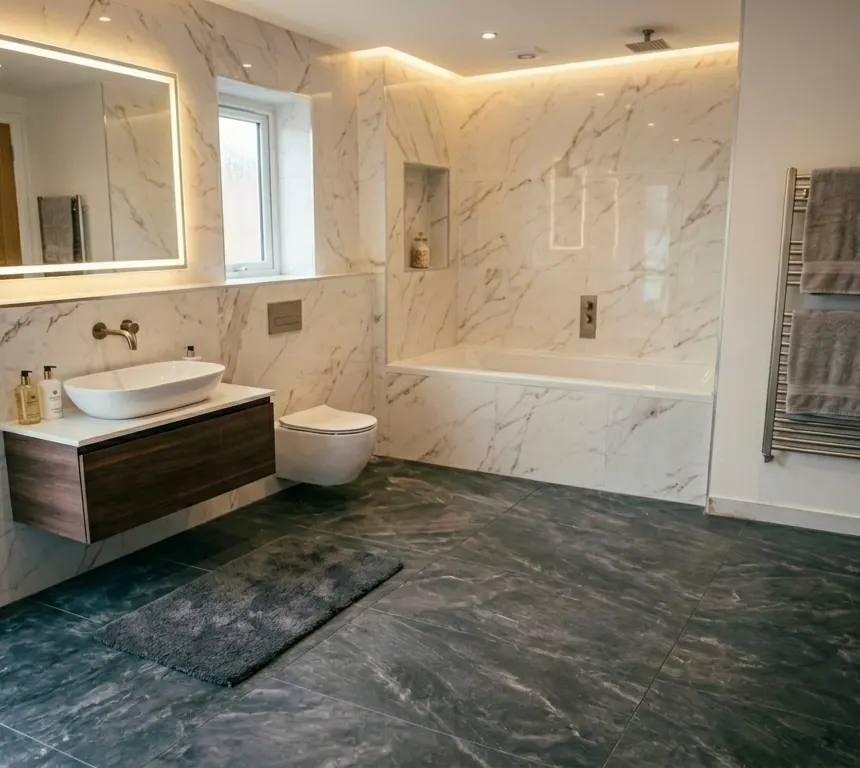
Plenty of guides will tell you a bathroom renovation costs “£5,000–£8,000” and leave it there. Far more useful is knowing where that money actually goes — because once you understand the breakdown, you can see what’s worth spending on, where the big costs hide, and whether a quote stacks up. So here’s the honest 2026 breakdown: the labour-versus-materials split, and what each part of the job really costs.
The Totals
| Level | Typical 2026 cost (supply & fit) |
|---|---|
| Budget (suite swap, basic tiling) | £2,500 – £5,000 |
| Standard family bathroom | £5,000 – £8,500 |
| High-end / luxury / wet room | £10,000 – £20,000+ |
Most people renovating a standard family bathroom land in the £5,000–£8,500 band. London and the South East add roughly 15–30%; the North and Scotland tend to sit a little below the national average.
Labour vs Materials
Here’s the first thing worth knowing: a bathroom is labour-heavy. Across the trade, labour is usually 45–60% of the total — a bigger share than a kitchen. On a £6,500 bathroom, that’s roughly £3,000–£3,500 in labour and the rest in materials.
Why so labour-heavy? One word: tiling. A bathroom has a lot of wall and floor to cover, and tiling is slow, skilled work that can’t be rushed. That’s the single biggest reason two bathrooms of the same size can cost very different amounts.
Where the Money Goes, Line by Line
A full renovation is really eight or nine smaller jobs stacked together. Roughly, here’s how a standard bathroom budget divides up:
- Strip-out and disposal — ripping out the old suite, tiles and flooring, and skipping it. A day or so of labour plus skip hire.
- First-fix plumbing (and any electrics) — moving or renewing pipework for the new layout, plus wiring for lights, shaver points and an extractor. Plumbers charge roughly £280–£480 a day.
- Walls, boarding and waterproofing — plasterboarding, tile-backer board in wet areas, and tanking around the shower.
- Tiling — usually the single biggest line. Both the labour (£25–£60/m²) and the tiles themselves (£15–£150/m²). More on this below.
- Fixtures — toilet, basin, bath and/or shower: typically £600–£2,500 for the suite, depending on quality and brand.
- Fitting / second fix — installing the suite, taps, shower valve, screen and accessories, and connecting everything up.
- Flooring — tiles, LVT or vinyl, laid and sealed.
- Extractor, lighting and finishing — fan, downlights, sealant, and making good.
- Decorating — painting the untiled walls and ceiling.
Total fitting labour for a full bathroom typically comes to £2,500–£5,000 across all those trades, at day rates of roughly £200–£350 per tradesperson.
Why Tiling Is the Big One
If you want to control a bathroom budget, understand the tiling — because it’s where the money and the time both go. A typical bathroom has 15–25m² of wall and floor to tile, and the labour rate depends heavily on the tile:
- Small tiles (200×200mm), straight lay: £25–£35/m² labour.
- Large-format tiles (600×1200mm): £35–£50/m² labour.
- Herringbone or complex patterns: £45–£60/m² labour.
So a standard 15–20m² bathroom is often £600–£1,800 in tiling labour alone — before you’ve bought a single tile. Choosing a simple lay pattern over herringbone, or panelling a shower wall instead of tiling it, is one of the biggest levers you have on the final bill.
The quickest way to cut the cost
Because tiling drives so much of the labour, the fastest savings come from tiling less, not buying cheaper tiles. Half-tiling walls instead of floor-to-ceiling, or using waterproof shower panels in the wet area, cuts labour hours right down — often without anyone noticing the difference in the finished room.
What Moves the Price
- How much tiling — and how fancy the pattern.
- Moving the layout — keeping the toilet, bath and basin where they are is far cheaper than relocating them, because it avoids re-routing waste and supply pipes.
- Fixture spec — a £600 suite versus a £2,500 designer one.
- Size and condition — a bigger room, or one hiding rot or dodgy old pipework, costs more.
- Where you live — London and the South East run 15–30% above national rates.
How to Budget Smart
- Keep the layout where you can — the single biggest saving on the plumbing side.
- Tile less, not cheaper — labour is the cost, so reduce the area and complexity.
- Spend where it shows and gets used — taps, shower and the things you touch daily — and save on what you don’t.
- Get a proper itemised quote — a good fitter will break it down so you can see the tiling, the suite and the labour separately, and adjust.
- Get two or three quotes from experienced bathroom fitters — not day rates, so the price is the price.
The Short Version
A standard bathroom renovation costs £5,000–£8,500 in 2026, budget refits from £2,500, and high-end from £10,000. Roughly half is labour — and within that, tiling is the biggest single cost, because a bathroom has 15–25m² to tile at £25–£60/m². Keep the layout, tile less rather than cheaper, spend where it’s used, and get itemised fixed-price quotes — and you’ll know exactly where every pound is going.