Wet Room vs Walk-In Shower: Which Is Right for You?
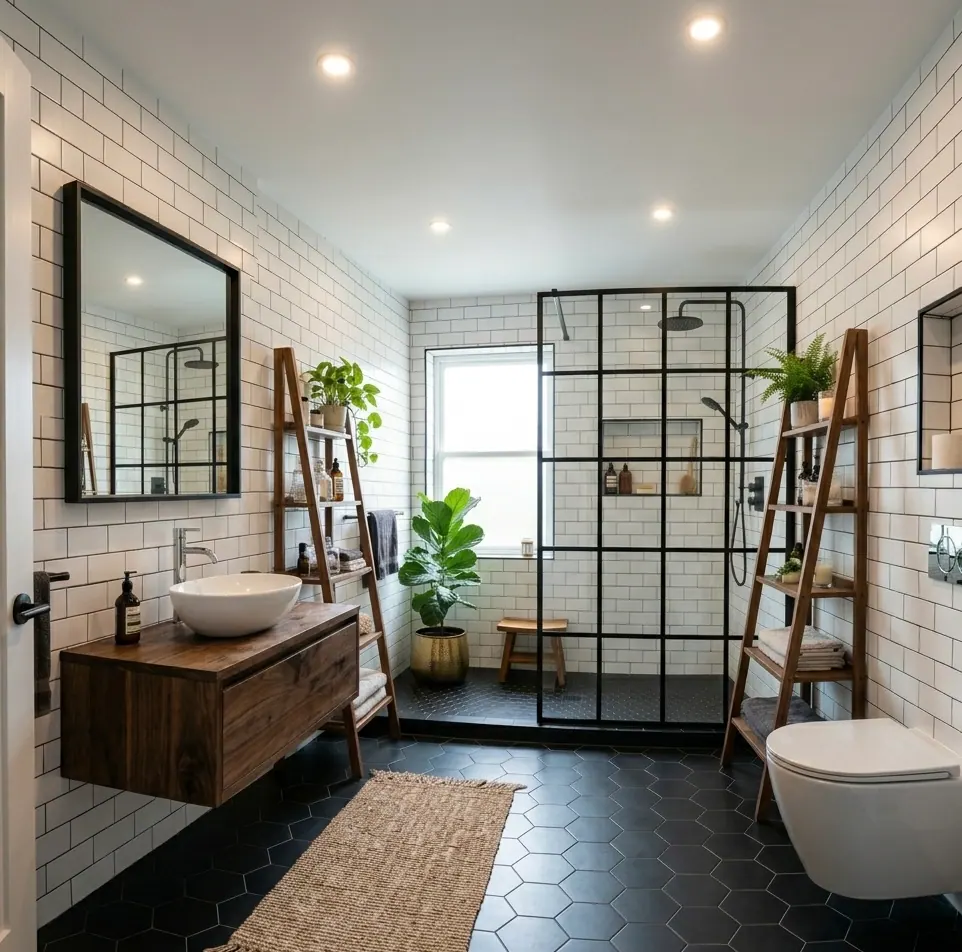
They look similar in the brochure, but they’re built very differently — and cost very differently. The honest short answer: for most bathrooms a walk-in shower is the practical winner — cheaper, drier and easier to fit; a wet room earns its premium for step-free accessibility, a seamless open look, or a generous en-suite. Here’s the real difference and how to choose, with 2026 UK figures.
The Real Difference
It comes down to how the water is contained:
- A wet room is a fully waterproofed (“tanked”) room. The floor is level with the rest of the bathroom and slopes gently to a drain — no tray, often no screen. Open, seamless, step-free.
- A walk-in shower has a low-profile tray and one or two glass screens. Only the shower zone is waterproofed; the water stays in it and the rest of the floor stays dry.
That one design choice — tank the whole room, or contain the water in a tray — drives everything else: cost, space, maintenance and how the finished room feels.
What Each Costs
A wet room is the more expensive build, because waterproofing the whole room is a bigger job than dropping in a tray:
- Walk-in shower: from around £1,500–£4,500, depending on spec — a pre-formed tray, a screen and the shower itself.
- Wet room: typically £5,000–£10,000, because the whole floor and walls are tanked, the sub-floor formed with the right falls, and linear drainage set in.
Like for like in the same space, a wet room usually runs around 20–30% more — often £1,500–£3,000 extra — than the equivalent walk-in shower. For the full breakdown, see our wet room cost guide.
Walk-In Shower: The Case For
- Cheaper and simpler. A pre-formed tray needs far less structural and waterproofing work, so it’s quicker to fit and kinder to the budget.
- The floor stays dry. The screen and tray keep 100% of the water in the shower zone — no soggy bathmats, no water creeping under the vanity, less grout to maintain.
- Works in smaller bathrooms. It slots neatly into a normal-sized room without taking it over.
- Broad appeal at resale. A clean walk-in shower is what most buyers expect today.
The trade-off: there’s a screen and a shallow tray to clean, and it’s not the fully open, seamless look some people are after.
Wet Room: When It’s Worth It
- Step-free accessibility. The completely level floor is the gold standard for wheelchair users and anyone with mobility needs — nothing to step over.
- The seamless look. Done well, an open tanked room looks stunning and genuinely high-end — the reason it earns a premium in a principal suite.
- Tight or awkward en-suites. With no tray or bulky enclosure, a wet room can make the most of a small, oddly-shaped space — as long as it’s not so small it becomes one big shower.
- No enclosure to clean — no screen tracks or seals, though you do need good ventilation since the whole room gets damp.
The trade-offs: it costs more, it must be tanked properly by someone experienced (get this wrong and you get leaks), and splash reaches more of the room, so you need generous space to keep it practical.
The tanking is non-negotiable
Whichever you pick, the waterproofing is what makes or breaks it — and a wet room lives or dies on its tanking. It’s not a job for a general handyman: a properly tanked wet room stays watertight for decades, while a cheap one lets water into the floor and walls and costs far more to put right. Always ask an installer exactly how they’ll waterproof it.
Which Is Right for You
Go walk-in shower if…
You want the best value · your bathroom is a normal or smaller size · you’d rather keep the floor dry and maintenance low · and you want broad appeal for resale.
Go wet room if…
You need genuine step-free access · you want the seamless, high-end open look · you’ve got a generous space (or an awkward en-suite that suits a trayless layout) · and the extra cost is worth it to you.
And remember the golden rule from the bath-vs-shower question: whichever you choose, keep a bath somewhere in the home if it’s your only one.
The Short Version
A walk-in shower is cheaper (from ~£1,500–£4,500), drier, lower-maintenance and fits smaller rooms — the right call for most bathrooms. A wet room (~£5,000–£10,000) costs more and needs proper tanking and space, but it’s unbeatable for step-free access and the seamless, high-end look. Pick by what matters most to you — budget and practicality point to the walk-in; accessibility and the open aesthetic point to the wet room — and either way, make sure it’s waterproofed by someone who knows what they’re doing.