6 Shower Tray Fitting Mistakes That Cause Problems
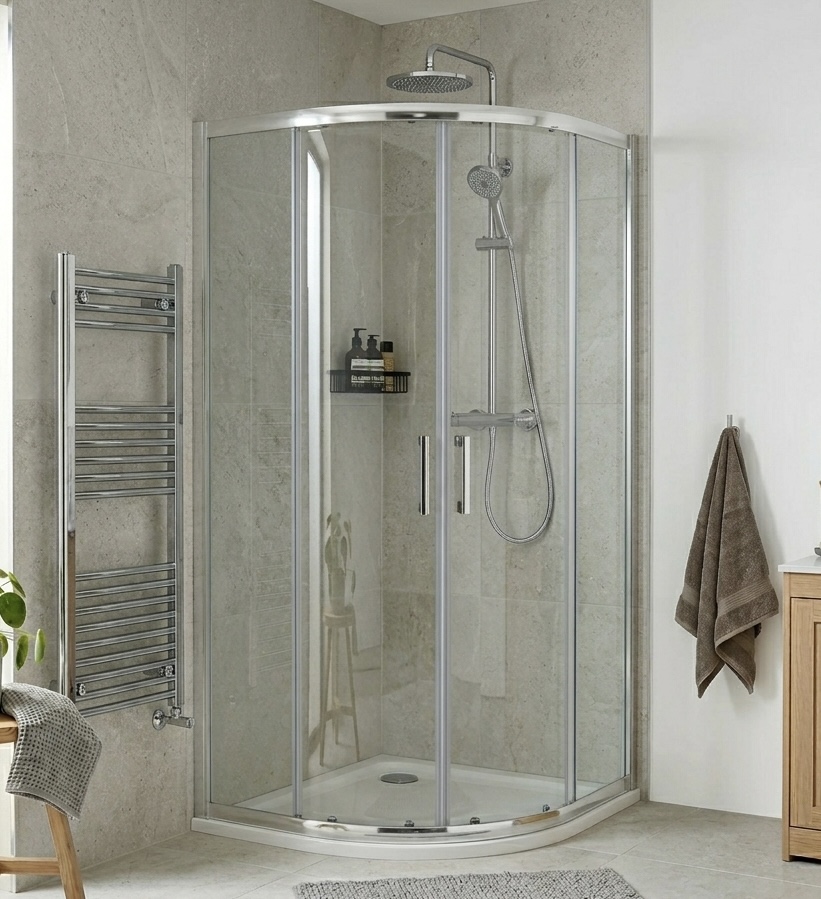
Shower trays look simple enough — a flat surface with a hole in it. But the number of things that can go wrong between unpacking the tray and stepping into a watertight shower is surprising. Most of the problems don’t show up on day one. They show up weeks or months later as cracks, leaks, rocking, or drainage issues. Here are six mistakes that cause the most problems and how to avoid every one of them.
Mistake 1: Storing the Tray Upright
This one happens before you even start the job. The shower tray arrives, you lean it against a wall in the garage or spare room, and it sits there for a week or two while you prep the bathroom. By the time you come to fit it, the tray has bowed.
Acrylic and stone resin trays are rigid but not infinitely so. Leaning them upright means the weight of the tray is concentrated on the bottom edge, and over days or weeks the middle gradually bows outward. Once a tray has warped, getting it to sit flat on the floor is a fight you won’t win.
The fix
Store the tray flat from the moment it arrives. Lay it face-down on a clean, flat surface with the protective film still on. If you need to lean it briefly to move it through a doorway, that’s fine. But don’t leave it standing upright for more than an hour or two. Keep it flat right up until the day you fit it.
Mistake 2: Not Levelling the Floor Properly
This is the single biggest cause of shower tray problems. The floor under a bath or in a bathroom extension is almost never level. Old properties are worse — floors that have settled over decades, mortar lumps, high spots where old fixings were, and low corners that are centimetres out.
A shower tray placed on an uneven floor will rock. Body weight concentrates on the supported areas and the unsupported sections flex. Over time, that flexing fatigues the material and causes cracks. It also breaks the seal between the tray and the waste trap, causing leaks underneath that you won’t see until the ceiling below is stained.
How to level it properly
- Find the single high point using a spirit level placed in multiple directions across the floor.
- Pack up every low point using plastic levelling packers (available in mixed-thickness packs). Stack packers until a spirit level between that point and the high point reads true.
- Glue the packers down so they can’t shift during the pour.
- Batten off the edges to create a dam so the compound stays where you want it.
- Prime the floor, mix self-levelling compound per the manufacturer’s instructions, and pour it in. Work it into the low areas until the compound just touches the tops of every packer stack.
- Leave it overnight. Even if the product says it’s walkable in 4 hours, give it a full 24 hours before putting a tray down. You do not want this stage to go wrong.
For the full levelling process in the context of a bath-to-shower conversion, see our dedicated guide.
Mistake 3: Not Leaving Enough Room Under the Trap
The shower trap sits underneath the tray, connecting the waste outlet to the drain pipe. It needs clearance below it — both to physically fit and to allow you to tighten and adjust it.
If the trap is sitting on the floor (or worse, pressing against it), three things go wrong:
- It pushes the tray up. The trap acts as a high point under the waste hole, lifting the centre of the tray while the edges sit lower. All your levelling work is wasted.
- You can’t tighten it. Without clearance underneath, you can’t get your hands (or tools) in to make the connection watertight.
- It can’t be maintained. Traps need cleaning or replacing eventually. If there’s no access space, that’s a rip-out job instead of a five-minute service.
The fix
Before you lay the tray permanently, place it dry and mark exactly where the trap will sit. Lift the tray, then dig out or chase out the floor in that area to create a clear pocket. Measure from the bottom of the pocket to the underside of the tray waste hole — that measurement tells you the exact height to set the top of the trap. Glue the waste pipe assembly at that height, let it cure, then lay the tray over the top knowing everything will line up.
Mistake 4: Using the Wrong Adhesive
The tray needs to be bonded to the levelled floor so it can’t move, rock, or lift. What you bond it with matters.
Premixed tile adhesive is a common choice, but it’s a poor one for this job. Premixed adhesive cures by drying out, which works fine in a thin layer under a tile. Under a shower tray, the adhesive is sandwiched between two non-porous surfaces (the tray underside and the levelling compound). Very little air reaches it. It can take weeks to fully cure, and until it does, the tray can shift.
Cement-based (powder) tile adhesive that you mix with water is better — it cures by chemical reaction, not evaporation, so it sets regardless of air exposure. But it’s rigid once set, with no give for minor flex.
The best option
Adhesive construction foam (not standard expanding foam) is purpose-made for bonding heavy, flat surfaces. Apply in strings across the floor, let it go tacky for about 5 minutes, then lower the tray onto it. It sets fully in about 30 minutes, it fills minor voids and unevenness, and it bonds permanently to both surfaces. It also has slight flexibility, which means it absorbs minor movement from the tray under load rather than cracking like rigid adhesive would.
Mistake 5: Forgetting the Protective Film
New shower trays come with a protective plastic film on the surface. It’s there for a reason — it protects the tray from scratches, scuffs, adhesive smears, silicone stains, and boot prints during the rest of the bathroom fit.
Two mistakes happen with this film:
- Peeling it off too early. Don’t remove the film until the very last stage of the job — after the wall panels are up, the shower valve is fitted, the screen is in, and the siliconing is done. The film is your insurance against every tool drop, boot scuff, and silicone smear that happens between fitting the tray and finishing the bathroom. Peel it back just enough to expose the edges for siliconing, then remove the rest last thing.
- Not peeling it back from the trap before tightening. The film can get trapped under the waste flange, preventing it from sealing properly against the tray surface. Peel the film back around the waste hole before you tighten the trap. It’s a small detail that causes real leaks.
Mistake 6: Overtightening the Trap
The shower waste trap connects to the tray from underneath with a threaded ring or a compression fitting. It needs to be firm — but not cranked down with all your strength.
Shower trays are not made of steel. The waste outlet area is reinforced, but it’s still plastic or resin, and it will crack under excessive force. A cracked waste flange leaks. And because the crack is underneath the tray, you won’t see it until the damage is done.
The fix
Tighten the trap like a snare drum — evenly and firmly, not with maximum force. The seal is made by the rubber washer or O-ring compressing between the trap and the tray. Once you feel resistance and the washer is compressed, stop. If you’re using pliers or a wrench, one light nip past hand-tight is enough. If you hear a crack, you’ve gone too far — and that’s a new trap (and possibly a new tray) rather than a five-second fix.
Use suction cups
One more practical tip: you’ll need to lift the tray in and out several times during fitting — to mark the trap position, check the level, test the fit, and finally lay it down permanently. A pair of suction cup lifters (the kind used for carrying glass) makes this dramatically easier, especially if you’re working alone. Shower trays are awkward and heavy, and trying to grip the edges while lowering it accurately onto a waste trap is a recipe for a dropped tray and a broken trap.