How to Fix a Leaking Basin Waste (The Easy Way)
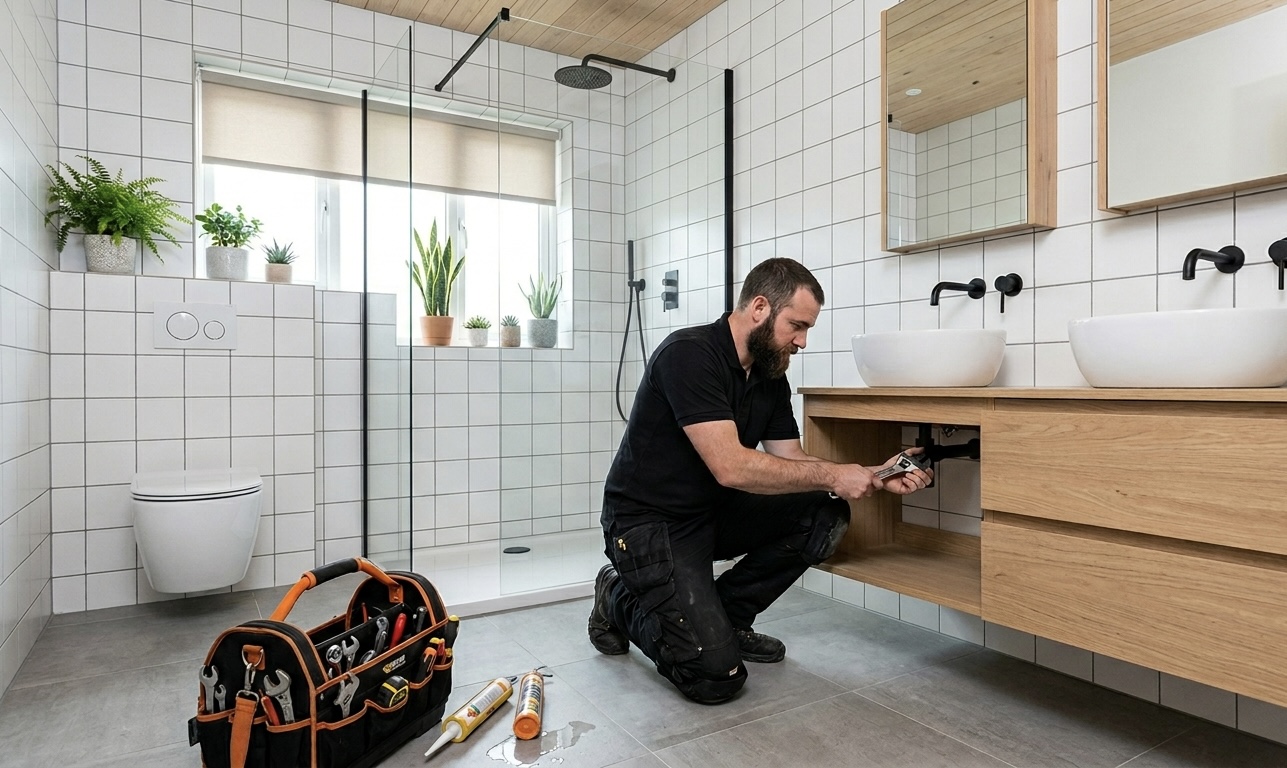
You’ve tried silicone. You’ve tried PTFE tape. You’ve taken it apart and put it back together three times. It’s still dripping. Basin wastes are one of the most frustrating leaks in plumbing because they look simple but the standard sealing methods often don’t work. There’s a better way, and it takes about five minutes.
Why Basin Wastes Leak
A standard basin waste has a body that drops through the hole in the basin from above, with a rubber O-ring and a back-nut that tightens from underneath. The O-ring is supposed to seal against the underside of the basin. In theory, tighten the nut and it’s watertight.
In practice, two things go wrong:
- The underside of the basin isn’t flat. Ceramic and porcelain basins are moulded, and the underside around the waste hole is often slightly uneven, rough, or domed. The O-ring can’t make full contact with an irregular surface, so water seeps past it.
- Water tracks down the threads. Even if the O-ring seals against the basin, water can travel down the threaded section of the waste body on the inside and find its way past the back-nut. Threads are not watertight by design — they’re designed to clamp, not to seal.
The result is a persistent drip from underneath the basin that defies every attempt to fix it with conventional methods.
Why Silicone and PTFE Often Don’t Fix It
Silicone sealant around a basin waste is a common first attempt. It works sometimes, but it has real limitations here:
- It cures rigid. Once set, silicone has no give. If the waste body moves even slightly — when you push down on the plug, or when the trap gets knocked — the rigid silicone cracks or peels away from the surface. The seal breaks and the drip returns.
- It doesn’t bond well to wet or greasy surfaces. If there’s any residual moisture or soap residue on the underside of the basin (and there almost always is), the silicone won’t adhere properly.
- It’s messy to redo. Getting old silicone off a basin waste thread is tedious. Every failed attempt leaves more residue, making the next attempt even less likely to seal.
PTFE tape on the threads is the other common approach. It helps with thread sealing but does nothing for the O-ring contact problem on the underside of the basin. If the leak is coming from the basin-to-waste interface (which it usually is), PTFE on the threads won’t touch it.
The Basin Waste Seal Kit
These are sold under various names — basin waste seal kits, magic seal kits, or by brand names like Thomas Dudley. They cost a couple of pounds and they work remarkably well.
The kit contains three components:
- A rubber cone seal — this slides up the waste body from underneath and compresses against the underside of the basin. Unlike a flat O-ring, the cone shape conforms to uneven surfaces. It creates a seal even on rough or domed basin undersides where a flat O-ring fails.
- A foam washer — sits above the cone seal as a secondary cushion and provides even pressure distribution.
- A plastic collar — sits between the foam washer and the back-nut. As you tighten the nut, the collar compresses the foam and cone seal evenly against the basin.
Between them, these three components address both leak paths: the cone seal handles the uneven basin surface, and the compression of the assembly creates a watertight barrier around the threads as well.
How to Fit It
- Remove the trap. Unscrew it from the waste tail. You’ll need access to the back-nut.
- Remove the back-nut and old seals. Use pliers or a basin wrench to undo the back-nut. Take off the old O-ring and any washers. Leave the waste body sitting in the basin hole from above.
- Clean up. Strip off any old silicone, PTFE tape, or plumber’s putty from the waste body threads and the underside of the basin. Everything needs to be clean for the new seal to work properly.
- Keep the top O-ring. There’s usually a rubber washer or O-ring between the waste flange and the top of the basin (inside the bowl). Leave that in place — the seal kit deals with the underside.
- Assemble the seal kit. From the bottom, slide the components onto the waste body in this order:
- Rubber cone seal (pointed end facing up towards the basin)
- Foam washer
- Plastic collar
- Back-nut
- Tighten the back-nut. Hold the waste body from above so it doesn’t spin, and tighten the nut from below. Firm is enough — the cone seal compresses and finds its own centre as you tighten. Don’t go mad with the pliers or you risk cracking the basin.
- Reattach the trap and run the tap to test.
Don’t overtighten
Ceramic basins can crack if you put too much force on the back-nut. The seal kit works through compression of the rubber cone, not through brute clamping force. If you can see the cone seal starting to bulge out sideways, that’s tight enough. Going further risks cracking the ceramic around the waste hole — and that’s a new basin, not a new seal kit.
When to Replace the Waste Entirely
A seal kit will fix the vast majority of leaking basin wastes. But occasionally the problem is the waste body itself:
- Cracked or corroded waste body. Cheap chrome-plated wastes can corrode over time, especially in hard water areas like Cambridgeshire. If the chrome is flaking or the body is visibly pitted, the threads won’t seal reliably no matter what you put around them. Replace the whole waste.
- Stripped threads. If the back-nut spins without tightening, the threads on the waste body are stripped. A seal kit can’t compensate for threads that don’t grip. New waste needed.
- Wrong size waste. Basin wastes are 32mm (1¼″). Kitchen sink wastes are 40mm (1½″). If someone has fitted the wrong size at some point, no seal kit will bridge that gap. Check the size before you start.
Slotted vs unslotted
If your basin has an overflow hole (most do), you need a slotted waste — it has a slot cut into the body that lines up with the overflow channel inside the basin. If there’s no overflow, you need an unslotted waste. Fitting the wrong type means either a blocked overflow or water leaking from the overflow hole. When buying a replacement, check which type you need before you order.