7 Signs Your Boiler Is About to Fail
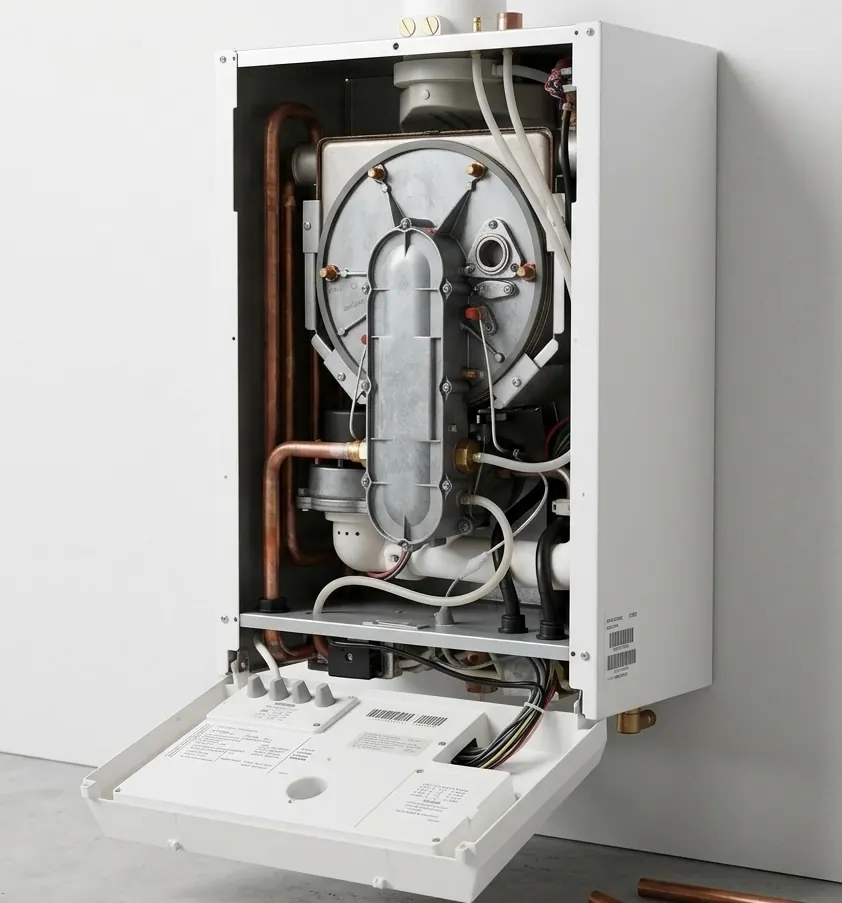
Boilers don’t break down out of nowhere. They break down in January, having been telling you since about October. Almost every emergency call-out we hear about had warning signs weeks or months earlier — a noise, a pressure drop, a reset that became a habit. Here are the seven signs worth acting on, what each one actually means, and which one means stop and pick up the phone right now. Summer is the cheap time to sort all of them.
1. Kettling, Banging or Whistling
If your boiler rumbles like a kettle coming to the boil, that’s kettling — and it’s the sign most worth taking seriously early. Limescale or sludge has built up on the heat exchanger, restricting water flow, so water boils in patches instead of moving through.
Left alone, the repeated stress can crack the heat exchanger, which is one of the priciest parts on the boiler — typically £400–£750 to replace, and often the repair that tips an older boiler into “not worth fixing”. Caught early, the fix can be as simple as a chemical flush and an inhibitor top-up.
Around here it matters more than most places. We’re in a hard water area, so scale builds faster than the national average — kettling in this part of Cambridgeshire is common, and it’s exactly why inhibitor and the occasional system flush earn their keep.
2. Pressure That Keeps Dropping
A quick top-up once or twice a year is normal. Cold system pressure should sit at roughly 1.0–1.5 bar. If you’re refilling every few weeks, that’s not a quirk — water is escaping somewhere, usually a small leak in the pipework or a radiator valve, or a failing expansion vessel.
Below about 0.5 bar most boilers shut down entirely to protect themselves, which is often the moment people discover the problem — on the coldest morning of the year. We’ve covered the causes in detail in boiler keeps losing pressure. The short version: repeatedly topping up is treating the symptom, and a hidden leak doesn’t heal itself.
3. You’re Resetting It Regularly
A boiler that locks out has deliberately shut itself down — it’s a safety circuit-breaker, not a glitch. A sensor spotted something outside safe limits and the control board pulled the plug.
One reset after a one-off is fine. A reset that has become part of your routine is a component on its way out, and the fault code on the display is the boiler telling you which one. If you’ve started pressing that button without even thinking about it, that’s your sign — note the code down and get it read properly.
Worth writing down
Before you call anyone, note the fault code on the display, the boiler make and model (usually on a sticker inside the front panel), and when it happens — on hot water only, on heating, first thing in the morning. Those three things can turn a diagnostic visit into a first-time fix, and often mean the engineer arrives with the right part.
4. Radiators Take Forever to Warm Up
If the house used to be warm in twenty minutes and now takes an hour, something has changed. Usually it’s sludge — corrosion debris circulating and settling — which shows up as radiators cold at the bottom, or cold at the far end of the run while the ones nearest the boiler are fine.
Cold at the top is different and usually just trapped air: bleeding the radiator often sorts it. Cold at the bottom is sludge, and it needs flushing. Either way, the boiler is working harder for the same result, and sludge is one of the main reasons boilers die young. Our guides on a radiator not heating up and balancing radiators cover the DIY end of this.
5. Bills Creeping Up for No Reason
Same house, same habits, same thermostat — and the gas bill keeps climbing. An ageing boiler loses efficiency gradually before it fails outright, burning more gas to deliver less heat. It’s the least dramatic sign on this list and the easiest to miss, because there’s no noise and nothing to notice on any single day.
A modern condensing boiler runs at 90%+ efficiency. A tired old unit can drift well below that, and you pay the difference every month without ever seeing a fault. If bills are climbing and the boiler is over a decade old, that’s two signs, not one.
6. Damp, Drips or Staining Around the Boiler
Any water where water shouldn’t be needs looking at — a drip from underneath, rusty streaks on the casing, damp patches on the wall behind, or a persistently wet patch under the pipework. Small internal leaks corrode components and electrics, and a slow drip today is often a proper failure a few months later.
Black sooty marks or heavy condensation on or around the boiler are a different matter entirely, and belong with sign seven below — treat those as urgent.
7. A Yellow Flame — The Urgent One
A healthy gas flame is crisp blue. If you can see the flame and it’s yellow or orange, that means incomplete combustion — and incomplete combustion can produce carbon monoxide. CO is colourless, odourless and can kill. Sooty black marks around the boiler, or unusual condensation on the windows in that room, point the same way.
If you see a yellow flame, act now
Turn the boiler off. Open the windows. Leave the property. Call the National Gas Emergency Service on 0800 111 999 — it’s free and staffed 24 hours. Don’t use the boiler again until a Gas Safe registered engineer has checked it. If anyone in the house has headaches, dizziness or nausea that improve when they go out, get medical advice too. And if you don’t already have an audible carbon monoxide alarm near the boiler, buy one this week — they cost around £20 and they are the only warning you will get.
What to Do About It
Three of these — kettling, a slow-heating system, and pressure that needs regular topping up — are usually fixable and shouldn’t cost the earth if you catch them early. A service costs around £80–£150, typically about £100, and it’s the cheapest insurance you can buy against a January breakdown. Book it in summer: engineers are quieter, prices are keener, and a boiler that fails in August is an inconvenience rather than a crisis.
Age changes how you read all of this. Most boilers last 10–15 years. Under about ten, a warning sign usually means a repair. Past about twelve, especially with two or more of these signs at once, you’re looking at a boiler nearing the end — and it’s worth pricing a replacement alongside any large repair quote. Our repair or replace guide gives the money test, and the 2026 boiler cost guide gives you the numbers to weigh it against.
The Short Version
Watch for kettling, pressure drops, repeated resets, slow-heating radiators, rising bills and any damp around the boiler — those are repairs if you catch them early and breakdowns if you don’t. A yellow flame is not a wait-and-see: turn it off, ventilate, leave, and call 0800 111 999. Everything else on this list is cheaper to deal with in July than in January, and a £100 service is the cheapest thing on this page.