Signs of a Hidden Water Leak — and What It’s Costing You
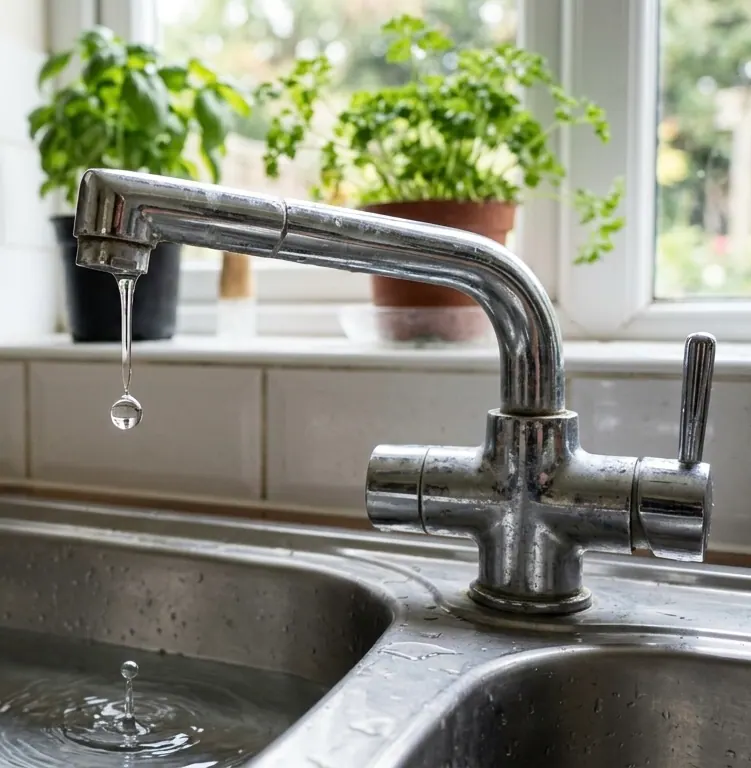
You don’t need to guess. Turn off every tap and appliance, read your water meter, wait 30 minutes without using a drop, and read it again. If the numbers moved, you have a leak. That one test settles in half an hour what people spend weeks wondering about. Below: the signs worth acting on, the test in full, what each kind of leak is quietly costing you — and the bit almost nobody tells you, which is who actually pays to fix it.
The Signs of a Hidden Leak
A leak you can see is a job. A leak you can’t see is a bill that grows every month. These are the tells:
- A water bill that’s gone up with no change in usage. Same house, same habits, bigger bill — that’s the single most common way a hidden leak announces itself.
- Damp patches or staining on walls, ceilings or floors — especially ones that come back after drying out.
- Bubbling or flaking paint, or wallpaper lifting at a seam. Water behind the surface pushes the finish off the wall.
- Warped, springy or lifting floorboards, or floor tiles that have started to sound hollow.
- A musty smell, or mould that keeps returning after you clean it off. Mould that comes back in a fortnight isn’t a cleaning problem — something is staying wet.
- Low water pressure that’s appeared without explanation.
- The sound of running water when everything is turned off. Worth listening for last thing at night when the house is quiet.
- A patch of lawn or driveway that stays green, soft or wet in dry weather — the classic sign of a leak on the buried supply pipe.
Any one of these is worth the meter test below. Two or more together, and you almost certainly have one.
The 30-Minute Meter Test
This is the whole diagnosis, and it costs nothing.
How to do it
1. Turn off every tap, and make sure the washing machine, dishwasher and any ice maker aren’t running. Don’t flush a loo during the test.
2. Find your water meter and write the reading down — every digit, including the red ones.
3. Wait 30 minutes and use no water at all.
4. Read it again. If it’s moved, water is escaping somewhere.
Can’t find the meter? It’s usually near your internal stop tap — under the kitchen sink, in the downstairs loo, or in the garage. Outside, it’s often under a small plastic cover in the path or pavement near the boundary.
If the reading hasn’t moved, that’s genuinely good news for the pipework — but a damp patch with a still meter usually means the water isn’t coming from a supply pipe. Think roof, guttering, condensation, or a waste pipe that only leaks when something drains.
Inside or Outside? Narrow It Down
Once the meter has told you there’s a leak, one more step tells the plumber half of what they need to know before they even arrive — and it changes who pays.
Turn off your internal stop tap (the one under the kitchen sink or wherever your water comes into the house), then check the meter again over another spell of no usage.
- Meter still moving? The leak is before the stop tap — on the buried supply pipe between your boundary and the house.
- Meter stopped? The leak is inside the house, on your internal pipework or a fitting.
That’s a two-minute check that saves an hour of somebody’s time, and it’s worth telling whoever you call.
What a Leak Actually Costs
Here’s the part that surprises people. The leak you can hear is rarely the expensive one:
| Leak | Wasted per day | Roughly per year |
|---|---|---|
| Dripping tap | ~30–45 litres | £20 – £60 |
| Silent seep into the pan | ~100 litres | ~£74 |
| Continuously running cistern | 200 – 400 litres | £150 – £300 |
The line worth remembering
A dripping tap is loud and cheap. A leaking loo is silent and expensive. The one that keeps you awake costs you tens of pounds a year; the one you can’t hear at all costs hundreds. Severe cases have been recorded wasting thousands of litres a day.
To check a loo, wipe the back of the pan dry above the water line, then look again after 20–30 minutes with nobody flushing. A trickle or a faint wet trail means water is creeping past the flush valve. Some water companies will post you a free dye strip for exactly this test.
One caveat on all these figures: they only hit your pocket if you’re on a water meter. On unmetered rates, wasted water doesn’t change the bill — but the damage it does to floors, ceilings and plaster still costs plenty, and that’s the bigger number in the end.
Who Pays — and What to Ask For
Most guides stop at “call a plumber.” This is the bit worth knowing first, because it can save you the whole cost of the job.
- The water company is responsible for the mains and the communication pipe up to your property boundary.
- You are responsible for the supply pipe from that boundary into the house — usually running under your garden or drive — plus all internal pipework, fittings and appliances.
So on paper a buried supply-pipe leak is yours. But ask anyway. Many water companies run free or subsidised supply-pipe repair schemes, and several offer extra help if you’re on their priority services or a financial support scheme. A phone call before you commit to anything is free and occasionally saves four figures.
Check your insurance for “trace and access”
Trace and access cover pays for the cost of finding a leak — lifting floors, opening walls — and making good afterwards. Plenty of home insurance policies include it, and plenty specifically exclude it. Worth five minutes with your policy document before anyone starts lifting floorboards, because it can be the difference between a covered claim and a bill you pay yourself.
For finding a genuinely hidden leak, professional detection runs roughly £80–£1,600 depending on difficulty — a simple internal leak traced quickly sits at the bottom end, while a buried pipe needing acoustic listening gear or thermal imaging sits nearer the top. Non-invasive kit costs more per visit but usually saves money overall, because the alternative is digging up a driveway to find out.
When to Stop Looking and Call Someone
Some leaks are a genuinely satisfying DIY job — we’ve written guides on fixing a leaking stopcock, a leaking radiator valve, and a leaking basin waste. If you’ve found the culprit and it’s one of those, crack on.
Get someone in when: the meter says you’re losing water but you can’t find where; the damp is on a ceiling or spreading; the leak is on the buried supply pipe; water is anywhere near electrics; or the pressure has dropped across the whole house. Those need locating properly, and guessing means opening up the wrong wall.
And if it’s actively pouring rather than seeping — turn the stop tap off first, then call. Everything else can wait until the water has stopped.
The Short Version
Do the 30-minute meter test: everything off, read, wait, read again. If it moved, you have a leak — then use the stop tap to tell inside from outside. A dripping tap costs £20–£60 a year; a silently leaking loo costs £74–£300 and makes no noise at all. You own the supply pipe from the boundary in, but ask your water company about free repair schemes and check your policy for trace and access cover before anyone lifts a floor.