How to Solvent Weld Waste Pipe: Get a Perfect Seal Every Time
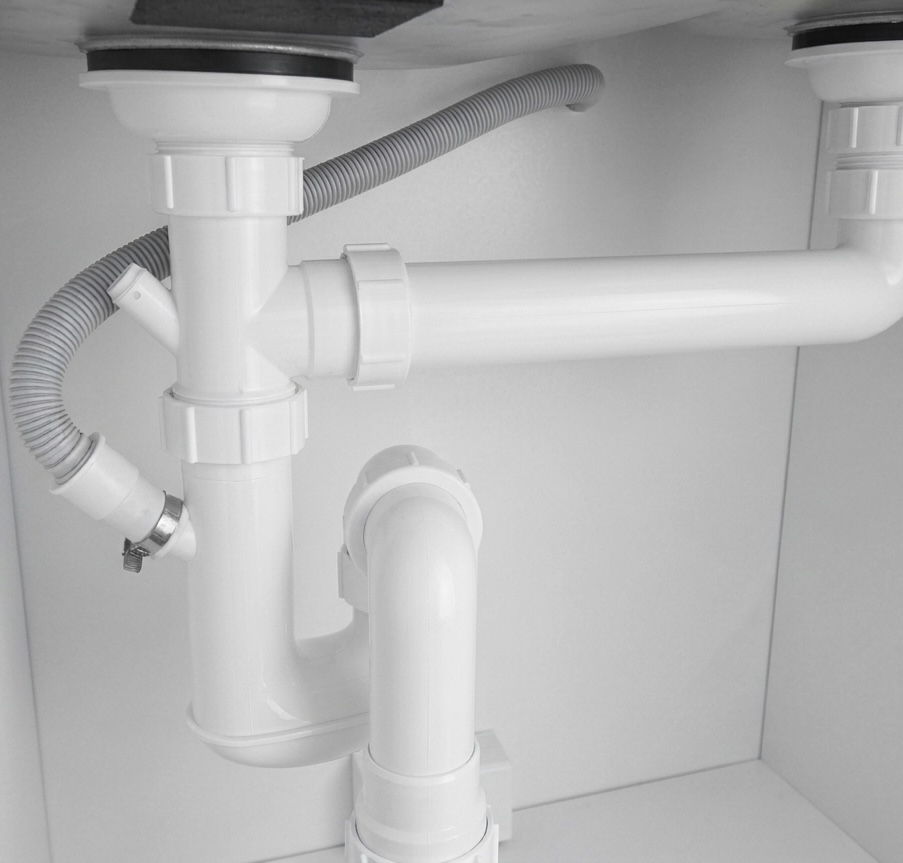
Solvent welding is one of those things that sounds intimidating until you’ve done it once. It’s not gluing — the solvent literally melts the surface of the pipe and the fitting, fusing them into one piece. Done properly, a solvent weld joint is stronger than the pipe itself and completely watertight. Done badly, you’ll be cutting it out and starting again, because once it’s set you’re not pulling it apart.
It’s Welding, Not Gluing
This is the most important thing to understand before you start. Solvent cement is not adhesive. It’s a chemical solvent that dissolves the surface layer of the plastic pipe and the inside of the fitting. When you push them together, those two melted surfaces fuse as one. Once the solvent evaporates, the joint is a single piece of plastic — not two pieces stuck together with something in between.
That’s why it’s permanent. That’s why you get one shot at it. And that’s why you need the right pipe — if the pipe surface doesn’t react with the solvent, you haven’t got a joint, you’ve got a pipe sitting loosely inside a fitting waiting to leak.
What You’ll Need
- Solvent weld waste pipe — 32mm for basins, 40mm for baths, kitchen sinks, and showers. Must be solvent weld type, not push-fit (more on this below).
- Solvent weld fittings — elbows, tees, couplers, whatever your run requires. Again, solvent weld type specifically.
- Solvent cement — comes in a tin with a brush built into the lid. Any reputable brand will do.
- Pipe cutter or hacksaw — a ratchet-style pipe cutter gives a far cleaner cut and is worth the small investment. If using a hacksaw, you’ll also need sandpaper.
- Marker pen — for marking cut lines and alignment marks on dry-fitted joints.
- Clean cloth — for wiping excess solvent.
Choosing the Right Pipe (This Trips People Up)
This is where most beginners go wrong. There are two types of plastic waste pipe that look almost identical on the shelf: solvent weld and push-fit. They are not interchangeable.
- Solvent weld pipe has a slightly larger outside diameter. A 40mm solvent weld pipe actually measures about 43mm across the outside. The fittings are sized to match — the pipe slides in with a snug fit.
- Push-fit pipe is genuinely 40mm on the outside. It’s designed to push into fittings with a rubber ring seal. It’s thinner-walled and the surface won’t react properly with solvent cement.
If you pick up push-fit pipe and try to solvent weld it, two things will go wrong: the pipe will be too small for the solvent weld fittings (it’ll rattle around inside), and the surface won’t melt and fuse properly even if you force it. The result is a joint that looks done but will leak.
Check the label, not the colour
Both types come in white and grey. Colour is not a reliable indicator of type — different manufacturers use different colours. The packaging or the print on the pipe itself will say “solvent weld” or “push-fit”. If it doesn’t say, check the outside diameter. A 40mm solvent weld pipe measures roughly 43mm with a micrometer or vernier calliper. A 40mm push-fit pipe measures 40mm.
If you’re working in a situation where you need to join solvent weld pipe to an existing push-fit system (or vice versa), adapter fittings are available. They have a solvent weld socket on one end and a push-fit socket on the other.
Cutting the Pipe
Mark your cut line with a marker pen. If you’re new to this, measure twice — you can’t add length back once it’s cut.
With a pipe cutter: Line the blade up with your mark, squeeze the handles, and rotate. These ratchet cutters give a perfectly square, clean cut with no burrs. It takes about five seconds. If you’re doing more than a couple of joints, a cutter is worth every penny.
With a hacksaw: Cut as squarely as you can. A mitre box helps if you have one. The cut will be rougher than a pipe cutter — you’ll have plastic shavings and a ragged edge that needs cleaning up before you go any further.
Deburring — Don’t Skip This
If you used a hacksaw (or even a pipe cutter that’s seen better days), there will be burrs on the cut edge — tiny ridges and shavings of plastic left from the cut. These need to come off, both inside and outside the pipe.
- Outside burrs will stop the pipe seating fully inside the fitting. If the pipe doesn’t hit the internal stop, the joint is shallow and weak.
- Inside burrs are worse. They create tiny snag points inside the pipe where hair, soap scum, grease, and debris will catch. Over time, that builds up into a blockage. It might take months, but a rough internal edge on a kitchen sink waste or shower waste is a blockage waiting to happen.
Use medium-grit sandpaper, a deburring tool, or even a sharp Stanley knife blade to clean both edges until they’re smooth. Run your finger around the inside rim — if you can feel any roughness, it’s not done.
Making the Joint
This is the bit that makes people nervous. Don’t overthink it — it’s a simple, quick process. But you do need to work with purpose because the solvent starts reacting immediately.
- Open the solvent cement and have it ready. The brush is built into the lid. Make sure your pipe end and fitting are dry and clean.
- Apply a generous coat of solvent cement around the outside of the pipe end. Cover the full insertion depth — roughly 20–25mm for a standard fitting. Don’t be stingy. A thin, patchy coat won’t melt enough surface to form a strong bond.
- Push the pipe into the fitting with a twisting motion. Push it all the way in until it hits the internal stop inside the fitting. You’ll feel it bottom out. If it doesn’t seat fully, the joint will be shallow and prone to leaking.
- Hold it for a few seconds. The solvent makes the surfaces slippery, so the pipe can push itself back out if you let go immediately. Hold it firm for 10–15 seconds until it grips.
- Wipe off any excess solvent that has squeezed out around the joint with a cloth.
Solvent on the pipe, not inside the fitting
Some people apply solvent cement to the inside of the fitting as well as the pipe. This creates excess solvent inside the joint. When you push the pipe in, that excess gets squeezed further into the fitting — and it can pool inside bends or reduce the internal bore. On a 32mm basin waste, that reduction in bore is enough to cause slow drainage and eventual blockages. Apply the solvent to the pipe only. The pipe carries it into the fitting as you push it in, and that’s all you need.
Dry Fitting Complex Runs First
This is arguably the most valuable tip in this whole guide. Because you only get one shot at each joint, complex waste runs with multiple bends and tees need to be planned and tested before any solvent goes near them.
- Cut all your pipe lengths and assemble the full run dry — no solvent, just push the pieces together by hand. Solvent weld pipe and fittings are snug enough to hold together temporarily without cement.
- Check the alignment. Does the run fall correctly? Do the bends point the right way? Does it connect to where it needs to connect?
- Mark every joint. Once you’re happy with the layout, take a marker pen and draw a line across each joint — one mark on the pipe, one on the fitting, spanning the seam. This is your alignment reference.
- Disassemble and weld one joint at a time. Apply the solvent, push together with the twist, and line up your marker pen marks. If the marks are aligned, the joint is in the exact same orientation as your dry fit.
Without alignment marks, it’s surprisingly easy to push a bend in 90° out from where it should be. On a straight coupling that doesn’t matter. On an elbow or tee, it means the pipe goes the wrong direction and you’re cutting it out and starting again.
Work from one end to the other
When welding a multi-joint run, always start from the furthest point and work back towards your connection. If you start at the connection end and work outwards, the cumulative tolerance of each joint can push the final pipe out of position. Starting from the far end and working back gives you adjustment room on the last joint where it matters most.
Setting Time and Testing
Solvent cement sets fast. After about five minutes, the joint is firm enough that you won’t separate it without a saw. After 15–20 minutes, it’s strong enough to handle. For a full-strength cure, leave it an hour before putting the system under water pressure.
In practice, most people run water through after about five minutes and that’s usually fine for a waste pipe that’s only under gravity pressure. But if you’re working on a pressurised system or the joints will be concealed behind a wall or under a floor, give it the full hour. It’s not worth the risk for the sake of 55 minutes.
Cold weather slows the cure
Solvent cement relies on evaporation to cure. In cold conditions — below about 5°C — the solvent evaporates much more slowly, and the joint takes significantly longer to reach full strength. If you’re working in an unheated space during winter, double your cure times before testing. Some solvent cements won’t cure properly at all below freezing — check the tin.
Once set, test every joint. Run water through and check each connection for any sign of dampness. Solvent weld joints either seal perfectly or they don’t — there’s no middle ground. If one weeps, the pipe didn’t seat fully, the surfaces weren’t clean, or insufficient solvent was applied. Either way, the fix is to cut it out and redo it.
Solvent Weld vs Push-Fit — When to Use Which
Both do the same job. The choice comes down to where the pipe is going and whether you’ll ever need to take it apart.
- Use solvent weld for concealed runs — pipes going under floors, behind walls, into voids, or anywhere you can’t access for maintenance. A solvent weld joint is permanent and has no rubber seals to perish over time. Once it’s set, it’s not going to work itself loose or dry out. For a run that’s going to be buried under tiles or floorboards, that permanence is exactly what you want.
- Use push-fit for accessible runs — under sinks, behind bath panels, anywhere you can see and reach the joints. Push-fit is faster, adjustable, and can be dismantled if you ever need to reconfigure or clear a blockage. The trade-off is the rubber ring seals, which can degrade over decades.
Building Regulations don’t mandate one over the other for domestic waste, but it’s considered best practice to solvent weld any waste pipe run that will be concealed and inaccessible. A push-fit ring that fails behind a tiled wall is a far bigger problem than one that fails under a sink where you can see it and fix it.
Shelf life of solvent cement
An unopened tin of solvent cement lasts about two years. Once opened, the solvent starts evaporating every time you take the lid off. If the cement has gone thick, stringy, or has visible lumps, it’s past its best and won’t form a reliable joint. Don’t risk a concealed joint on old cement — a new tin costs a few pounds.