How to Change a Kitchen Tap
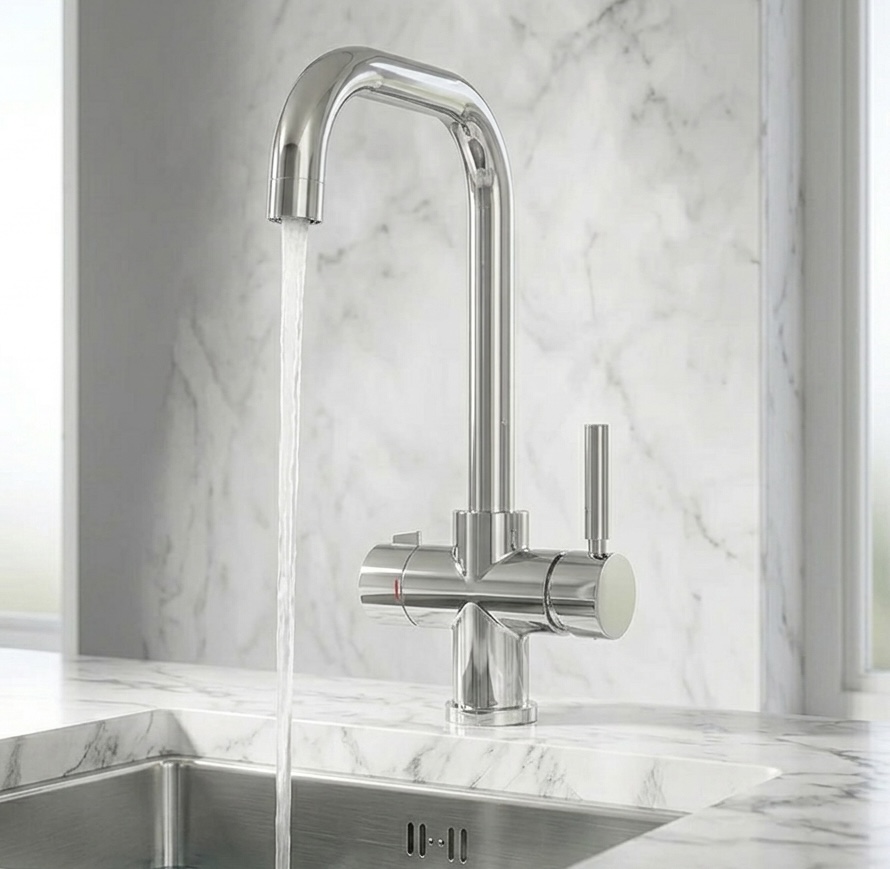
Changing a kitchen tap is one of those jobs that looks harder than it is. The tap itself takes minutes to fit — it's the awkward position under the sink that makes it a challenge. This guide walks you through the full process: tools, removal, fitting flexible connectors, and testing for leaks.
1. Tools and Materials You'll Need
Before you start pulling pipes apart, gather everything. Nothing worse than being on your back under the sink and realising you need a trip to Screwfix.
Tool checklist
- Adjustable spanners (two ideally — one to hold, one to turn)
- Plumbing grips for stubborn fittings
- Socket set with 10mm, 11mm, 12mm, and 13mm sockets
- Ratchet with extension bar — essential for reaching the tap fixing nut
- 15mm pipe cutter (if you need to shorten pipework)
- Flat-head screwdriver
- PTFE tape (just in case)
- Towel or small bucket to catch residual water
You'll also need the tap itself, plus flexible tap connectors. These come in male and female varieties — check what your pipework needs before buying. Female connectors are more common for kitchen taps. If your existing isolation valves are in good condition, you can connect straight to them. If not, pick up a pair of 15mm isolation valves and some half-inch to 15mm couplers.
2. Turn the Water Off
This one's obvious, but worth getting right. If you have isolation valves under the sink, use those — turn each one a quarter-turn with a flat-head screwdriver until the slot sits across the pipe. Then open the tap to check the water's actually off.
No isolation valves?
You'll need to turn off the mains at the stopcock (usually under the kitchen sink or in a utility cupboard). Once it's off, open the upstairs taps to let air into the system. This prevents water dumping out when you disconnect the old tap. It's also a good excuse to have isolation valves fitted while the pipework is exposed — saves this hassle next time.
3. Remove the Old Tap
This is the part that tests your patience, not your plumbing skills. The space under a kitchen sink is tight, and you'll probably be lying on your back inside the cupboard to reach everything.
Disconnect the supply pipes
Use your adjustable spanner to loosen the nuts connecting the flexible tap connectors (or copper pipes) to the supply. Have a towel underneath — there'll be residual water even if you've isolated correctly. Once both connections are loose, push the pipes aside.
Remove the fixing nut
Look up at the underside of the sink. You'll see a threaded rod coming through from the tap, held in place by a nut — usually 11mm or 12mm. This is where the ratchet with an extension bar earns its place. You can't get a regular spanner up there easily.
Loosen the nut, then unscrew the last few turns by hand. Hold the tap from above with your other hand — if it drops onto a ceramic sink, you'll chip it. Lift the tap out, and feed the old connectors through the hole. If they won't fit through together, disconnect one from the tap body first.
Clean the area around the tap hole. Built-up limescale and sealant comes off easily with a damp cloth and some white vinegar.
4. Fit Flexible Tap Connectors to the New Tap
Before the new tap goes anywhere near the sink, fit the flexible connectors to it on the worktop where you can actually see what you're doing.
The connectors have a small O-ring at the top that seals into the base of the tap. Thread them in by hand — hand-tight only. You don't need grips, you don't need PTFE tape, and you definitely don't want to cross-thread them. The O-ring does the sealing, not brute force.
Hot on the left, cold on the right
UK standard: hot supply connects to the left tap tail, cold to the right (when facing the tap). Some connectors have red and blue markings. Get this wrong and you'll have hot water from the cold side — you'll have to go back under the sink and swap them.
Most new taps also come with a threaded rod, a fixing plate (the bit that sits under the sink), and a rubber gasket or O-ring. Thread the rod into the base of the tap and tighten with a screwdriver. Make sure the gasket is seated — this stops water seeping through the tap hole from the worktop above.
5. Fit the New Tap to the Sink
Feed both flexible connectors down through the tap hole, then lower the tap into position. Some taps come with a decorative base plate — this goes on first if yours has one.
Get the tap straight and in its final position before you start tightening. Back underneath the sink: slide the fixing plate up over the connectors and onto the threaded rod, then thread the nut on and tighten with your socket and ratchet.
It helps to have someone hold the tap straight from above while you tighten from below. Once the nut is snug, check the tap doesn't rotate or wobble. If it does, tighten a bit more. Don't overtighten — you can crack a ceramic sink or warp a stainless steel one.
6. Plumb in the Tap Connectors
This is where the job varies depending on your existing pipework.
Best case: straight onto isolation valves
If your flexible connectors reach the isolation valves, thread them on by hand, then snug them up with an adjustable spanner. Don't overtighten — there's an O-ring inside the connector doing the sealing. A quarter-turn past hand-tight is usually enough.
If the connectors don't reach
You have two options:
- Cut the pipe and add couplers. Use a 15mm pipe cutter to trim the copper pipe to the right length, then fit a half-inch to 15mm compression coupler. Nut and olive onto the pipe, copper olive, then tighten the coupler. The flexible connector threads onto the other end.
- Add new isolation valves higher up. If you don't already have isolation valves (or yours are seized), this is the ideal time to fit them. Cut the pipe, fit the valve using compression fittings, and the flexible connector screws straight onto the top.
Don't double up on isolation valves
If you already have working isolation valves lower down, don't add a second set higher up just to make the connectors reach. Use couplers instead. Two sets of isolation valves in series restricts water flow for no benefit.
Whichever method you use, make sure the flexible connectors aren't kinked. They bend — that's the point — but a sharp kink will restrict flow and can fail over time. Gentle curves only.
7. Turn On and Test for Leaks
Turn on one isolation valve at a time. You'll hear the pressure fill the pipe. Before you even touch the tap handle, check every connection underneath for drips:
- Where the flexi connects to the tap body
- Where the flexi connects to the isolation valve or coupler
- Any compression fittings you added
- The base of the tap where it meets the sink
Now open the tap. Run both hot and cold separately — check you're getting hot from the left and cold from the right. If they're reversed, the connectors are on the wrong tails. Turn the water off and swap them.
Run water for a minute, then check underneath again. Some leaks only show under pressure or flow. While you're under there, make sure you haven't knocked any waste pipes loose — it's easy to disturb them when working in a tight space.
Quick leak check
Wrap a strip of dry kitchen roll around each connection. Leave it for 10 minutes with the tap running. If the paper stays dry, you're watertight. Easiest way to spot a slow drip you might otherwise miss.
When to Call a Plumber Instead
This is a manageable DIY job if your pipework is straightforward and your isolation valves work. But there are situations where it makes more sense to call someone in:
- Seized isolation valves — forcing a seized valve can snap the pipe or cause a flood. A plumber will replace the valve safely.
- Lead or imperial pipework — older properties (especially pre-1970s) sometimes have non-standard pipe sizes. Adapters exist, but getting it wrong means leaks.
- No isolation valves and no accessible stopcock — if you can't turn the water off, don't start the job.
- You're converting from pillar taps to a mixer — this often means adapting the sink holes or pipework, which is more involved than a straight swap.
- Low water pressure after fitting — could be a kinked flexi, a blockage in the new tap's aerator, or a pressure issue that needs diagnosing.
If any of that applies, or you'd simply rather not spend an afternoon on your back in a cupboard, we're happy to do it for you. Most kitchen tap replacements take us under an hour.